
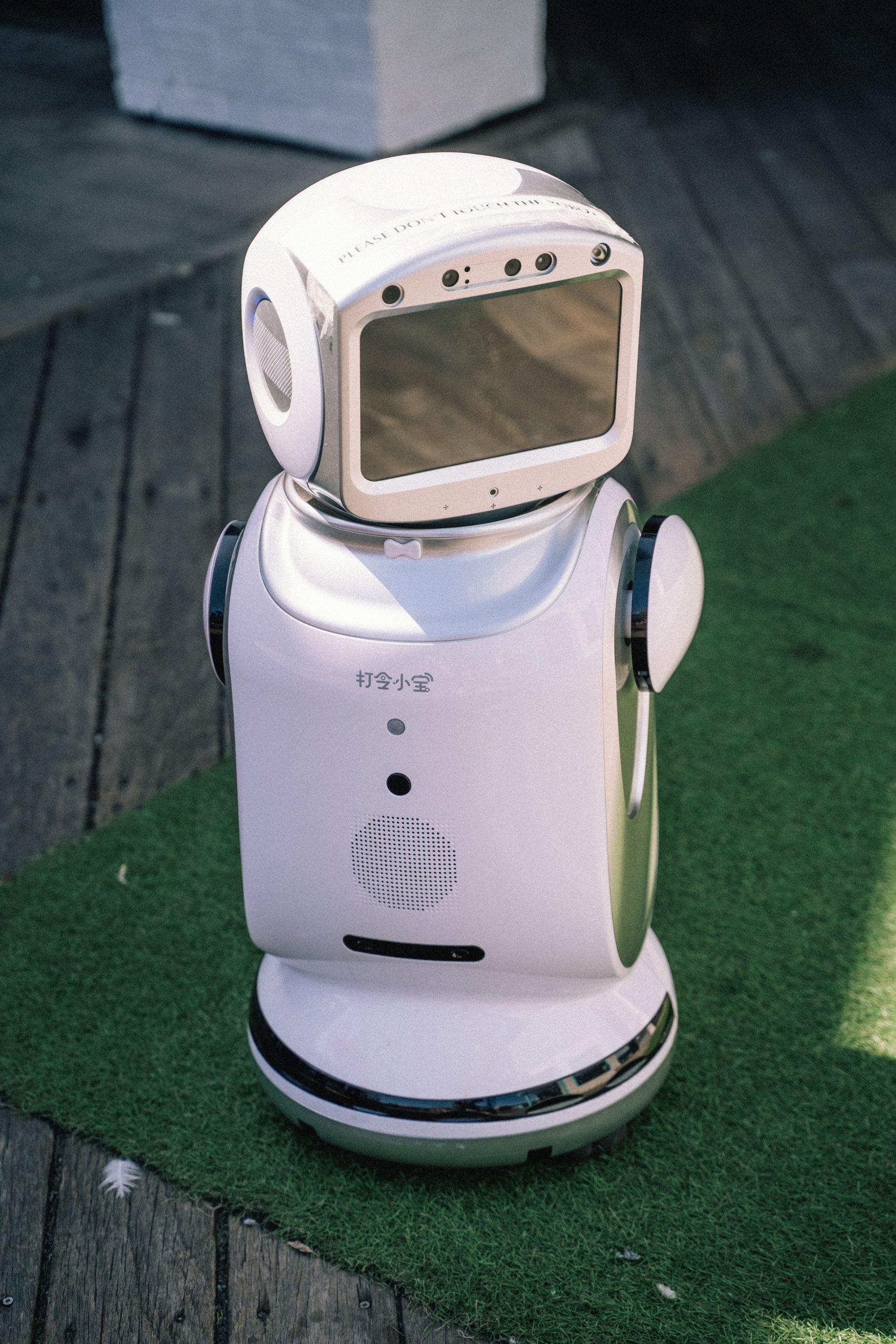
Artificial intelligence has already transformed how we create content, analyze information, write software, and communicate with technology. But the next major evolution of AI isn’t limited to computers and smartphones.
It’s beginning to interact with the physical world.
Known as Physical AI, this emerging field combines artificial intelligence with robots, autonomous machines, sensors, cameras, and other hardware. Instead of simply generating information or making recommendations, Physical AI systems can perceive their surroundings, make decisions, and take physical actions.
From warehouse robots and self-driving equipment to agricultural machines and intelligent drones, Physical AI could dramatically change how work gets done.
What Is Physical AI?
Physical AI refers to artificial intelligence systems designed to understand and interact with real-world environments.
Traditional AI primarily works with digital information. You provide an AI system with text, images, audio, or other data, and it produces a digital response.
Physical AI takes this a step further.
A Physical AI system may be able to:
- Observe its surroundings
- Recognize people and objects
- Understand where objects are located
- Navigate through an environment
- Respond to changing conditions
- Manipulate physical objects
- Make decisions in real time
- Learn from its interactions
Think of it as giving AI the ability to see, understand, move, and act in the physical world.
What Technology Makes Physical AI Possible?
Physical AI isn’t a single technology. It brings several technologies together.
Artificial Intelligence
AI provides the decision-making capabilities that allow machines to interpret information, solve problems, and determine what actions to take.
Computer Vision
Cameras combined with computer vision allow machines to recognize objects, people, obstacles, signs, and other visual information.
Sensors
Sensors can provide information about factors such as distance, temperature, pressure, movement, sound, and location.
Robotics
Robotic hardware allows AI to physically interact with the environment by moving, lifting, assembling, delivering, or manipulating objects.
Spatial Intelligence
Physical AI systems need to understand how objects and spaces relate to one another.
For example, a warehouse robot must understand where shelves, workers, packages, and other robots are located before it can safely navigate the building.
Examples of Physical AI
Warehouse Robots
Warehouses are increasingly using intelligent robots to move products and assist workers.
Rather than following one fixed path, advanced systems can identify obstacles, navigate changing environments, and determine efficient ways to complete tasks.
Autonomous Vehicles
Self-driving cars are another example of Physical AI.
These vehicles use cameras, sensors, maps, and AI to understand traffic conditions, identify pedestrians and vehicles, and make driving decisions.
The same technology can also be applied to autonomous trucks, buses, construction equipment, and other vehicles.
Agricultural Robots
Physical AI could make farming increasingly automated.
Intelligent machines can potentially help:
- Monitor crops
- Identify weeds
- Detect plant diseases
- Harvest produce
- Apply fertilizer or pesticides more precisely
This could help farmers manage larger areas while using resources more efficiently.
Intelligent Drones
AI-powered drones can navigate environments and collect information with less direct human control.
They can be used for applications including:
- Infrastructure inspections
- Agricultural monitoring
- Mapping
- Search and rescue
- Environmental monitoring
Manufacturing Robots
Traditional industrial robots usually perform highly repetitive tasks in controlled environments.
Physical AI can make these machines more adaptable. Instead of simply repeating the same movement, intelligent robots can potentially recognize different objects and adjust their actions when conditions change.
Humanoid Robots
Humanoid robots are one of the most ambitious applications of Physical AI.
Because many workplaces, homes, tools, and buildings were designed for humans, a human-shaped robot could potentially perform tasks without requiring the entire environment to be redesigned around the machine.
How Can Physical AI Be Beneficial?
Physical AI could provide significant advantages across manufacturing, transportation, healthcare, agriculture, logistics, construction, and many other industries.
1. Improved Workplace Safety
One of the biggest potential benefits is keeping people away from dangerous tasks.
Physical AI systems could perform work involving:
- Hazardous chemicals
- Extreme temperatures
- Heavy machinery
- Dangerous heights
- Disaster areas
- Repetitive heavy lifting
Humans could supervise these machines from a safer location rather than directly entering hazardous environments.
2. Increased Productivity
Physical AI systems can automate repetitive and time-consuming tasks.
In warehouses, for example, robots can transport products while human workers concentrate on tasks requiring judgment, communication, or creativity.
Combining human expertise with intelligent automation could allow organizations to accomplish more without simply increasing workloads.
3. 24/7 Operations
Machines don’t require traditional work schedules.
Physical AI could allow certain operations to continue around the clock, particularly in areas such as:
- Manufacturing
- Warehousing
- Logistics
- Agriculture
- Infrastructure monitoring
Human employees would still be needed for supervision, maintenance, planning, and tasks that require human judgment.
4. Greater Precision
AI-powered machines can potentially perform certain repetitive physical tasks with extremely high consistency.
This could benefit industries where small errors matter, including:
- Electronics manufacturing
- Medical technology
- Automotive manufacturing
- Laboratory work
- Quality inspection
Greater precision can also reduce wasted materials and defective products.
5. Assistance With Labor Shortages
Some industries struggle to find enough workers for physically demanding, repetitive, dangerous, or highly specialized jobs.
Physical AI could supplement the workforce by handling particular tasks rather than requiring every process to be performed manually.
Workers could then concentrate on responsibilities where human abilities provide greater value.
6. Faster Logistics
Physical AI could make the movement of products significantly more efficient.
Autonomous machines could assist with:
- Sorting packages
- Moving inventory
- Loading products
- Managing warehouse operations
- Last-mile deliveries
Smarter logistics could eventually result in faster deliveries and more efficient supply chains.
7. More Efficient Agriculture
Physical AI could help farmers make more precise decisions about their crops.
Instead of treating an entire field identically, intelligent machines could potentially identify individual plants that need water, nutrients, or treatment.
This could reduce unnecessary resource use while improving agricultural productivity.
8. Better Disaster Response
Physical AI could be especially useful in environments that are too dangerous for people.
Robots and drones could potentially enter:
- Collapsed buildings
- Wildfire zones
- Flooded areas
- Industrial accident sites
- Contaminated environments
Machines could search for survivors, map dangerous areas, deliver supplies, or provide emergency teams with information before humans enter.
9. Improved Accessibility
Physical AI could also assist people with disabilities or limited mobility.
Future applications could include intelligent robotic assistants that help with:
- Retrieving objects
- Opening doors
- Preparing simple items
- Navigating environments
- Performing household tasks
This could help some individuals live more independently.
10. Reduced Costs Over Time
Physical AI systems can require significant upfront investment, but automation may reduce certain long-term operating expenses.
Organizations could potentially reduce costs associated with errors, downtime, wasted materials, inefficient processes, and workplace accidents.
11. More Flexible Automation
Traditional automation often works best when everything remains exactly the same.
Physical AI has the potential to make automation much more adaptable.
A robot equipped with AI and computer vision may be able to recognize changes in its environment and adjust its behavior instead of requiring an engineer to reprogram every movement.
This flexibility could make automation practical for many more industries.
12. New Jobs and Industries
Physical AI won’t simply affect existing jobs. It could also create entirely new professions and business opportunities.
Growing fields could include:
- Robotics engineering
- AI safety
- Robot maintenance
- Autonomous system management
- Sensor technology
- Human-robot interaction
- AI training and simulation
People will be needed to design, operate, maintain, supervise, and improve these systems.
What Are the Challenges?
Giving artificial intelligence the ability to take physical action also creates serious challenges.
Safety is especially important. A chatbot producing an incorrect answer is very different from an autonomous machine making an incorrect physical movement.
Physical AI systems therefore require strong safeguards, extensive testing, cybersecurity protections, human oversight, and reliable ways for people to intervene when necessary.
Other challenges include cost, regulation, privacy, workforce disruption, reliability, and determining who is responsible when autonomous systems make mistakes.
Humans and Machines Working Together
Despite the attention surrounding fully autonomous robots, one of the most practical applications of Physical AI may be human-machine collaboration.
Instead of replacing humans entirely, intelligent machines can handle tasks that are repetitive, dangerous, physically demanding, or highly precise.
Humans can remain responsible for areas where we excel, including creativity, communication, empathy, strategy, and complex judgment.
The result could be workplaces where people and machines complement one another rather than simply compete.
The Future of Physical AI
The next generation of artificial intelligence won’t necessarily live entirely inside computers.
It could drive vehicles, inspect infrastructure, harvest crops, move packages, assist workers, respond to disasters, and operate machinery.
As robotics, AI, sensors, computer vision, and spatial intelligence continue to improve, the boundary between digital intelligence and physical machines will become increasingly blurred.
Final Thoughts
Physical AI represents an important shift in the evolution of artificial intelligence.
AI has already learned how to generate information and interact with the digital world. Physical AI is about giving intelligent systems the ability to understand and interact with the world around us.
Its potential benefits include safer workplaces, greater productivity, increased precision, improved accessibility, more efficient agriculture, faster logistics, better disaster response, and more flexible automation.
The next chapter of artificial intelligence may not simply be about machines that can think.
It may be about machines that can think—and then act.